Picture this: it's midnight in my cramped one-bedroom apartment, city lights flickering through the blinds. I'm doom-scrolling TikTok, laughing at memes, but my eyes are burning. Next morning, I'm dragging through a packed subway commute, head pounding, barely awake for that 9 a.m. meeting. Sound familiar?
That blue light from screens messes with your melatonin, the sleep hormone that tells your body it's time to crash. It tricks your brain into thinking it's daytime, revving you up when you need to wind down. Late-night sessions turn restful sleep into shallow toss-and-turns, leaving you foggy and irritable.
I've been there, night after night. But here's the good news: you don't need a total life overhaul. Simple, low-effort resets—like a screen-free zone and a quick routine—can get you powering down faster. Stick with me, and you'll wake up sharper, ready to tackle urban chaos without the zombie vibe.
Why Late-Night Scrolling Tanks Your Next-Day Vibe
Post-dinner Netflix binges hit hard in small apartments where the couch doubles as your bed. Your brain stays wired, suppressing deep sleep cycles. Come morning, you're snapping at baristas and zoning out in traffic.
Science backs it: screens emit blue light that delays REM sleep by up to an hour. I remember one week of endless episodes—my focus tanked during desk work, decisions felt impossible. It snowballs into stress-eating or skipped workouts.
Quick fix from my trial-and-error: I started tracking sleep with a basic app. Mornings improved instantly. This leads right into setting up your space—no fancy gear needed, just smart tweaks for real life. If you're building habits like this, weaving in how to build a morning routine that reduces anxiety makes the whole day smoother.
Design Your Screen-Free Wind-Down Corner
Small space? No problem. Charge your phone in the kitchen or bathroom—out of arm's reach from bed. I rigged a $5 shelf above my door for mine; now it's ritual to plug in there.
Dim the lights with a warm bulb or string LEDs—cheap at any drugstore. Ditch the harsh overheads that mimic office fluorescents. Add a no-phone zone sign if roommates are involved; keeps it light-hearted.
For shared beds, use a drawer or under-bed box for devices. Urban hack: bedside lamp with a red filter app on a non-smart bulb. These setups take 10 minutes but create a cue your brain craves. Next, the routine that flows from this corner.
The 4-Step Routine to Actually Power Down
-
Set a hard stop 60 minutes before bed. Dim house lights, move your phone to that charging spot. Why? It signals "work mode over"—no more sneaky checks. I do this at 10 p.m. sharp; my body anticipates rest now.
-
Swap scrolling for a sensory reset. Try audiobooks via speaker (not earbuds if possible) or simple stretches on the floor. In my apartment, I play ambient rain sounds—beats endless feeds. Adapt for city noise: white noise app on a non-scroll device.
-
Journal the day's wins in 5 minutes. Grab a notebook, jot three bullets: what went right, tomorrow's easy win. Low-effort brain dump clears mental clutter. My first night, it felt weird, but it cut racing thoughts by half.
-
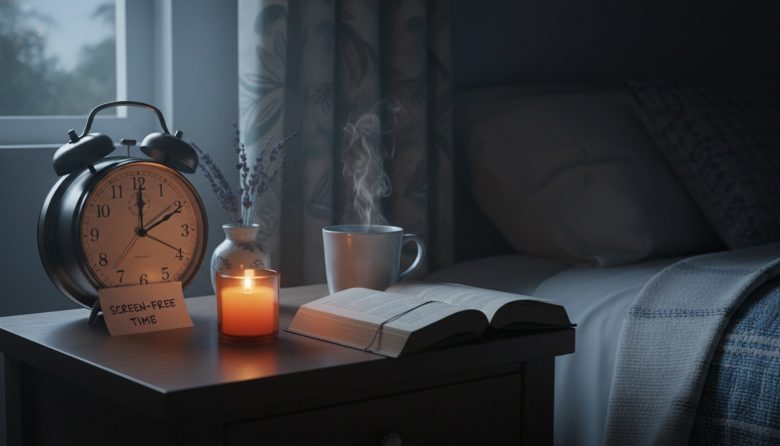
Lights out cue with a ritual. Sip herbal tea (chamomile packets are grab-and-go) or do 4-7-8 breathing: inhale 4, hold 7, exhale 8. Ties it all repeatable—mine's tea by the bed. Lights off, sleep hits fast.
This sequence builds momentum without overwhelm. Each step layers on the last, turning wind-down into autopilot. I've stuck to it for months; energy's consistent now.
Quick Tips to Kill the Screen Habit Fast
- Toggle grayscale mode on your phone—apps look boring in black-and-white, kills the urge.
- Set app limits during evening commute planning; use that time for podcasts instead.
- Stack a bedside book—grab paperbacks from thrift stores, flip pages till sleepy.
- Swap scrolls for a quick evening walk around the block; fresh air resets eyes.
- Buy a $10 alarm clock—ditch phone dependency for good.
- Text a friend your "screen-free by 10" pledge; accountability without nagging.
- Ironic twist: use a progress tracker app, but only mornings—celebrate streaks.
For Busy Days: The 2-Minute Desk-to-Bed Reset
Overtime or late dinners? Face-down phone in the kitchen sink. No peeking. Takes 10 seconds.
At your desk or couch, do 10 deep breaths—eyes closed, count 'em. Follow with a quick eye rinse under cool water; soothes blue-light strain.
This fallback fits any night. When how to delegate tasks to free up mental space feels out of reach, this 2-minute version keeps you consistent. Your 2-minute safety net—try it tonight.
Make It Sustainable Without the All-or-Nothing Trap
Stack habits, don't swap lives. Pair screen unplug with brushing teeth—automatic trigger. I added mine to my nighttime routine; forgot once, adjusted next day.
Weekly check-in Sundays: note what worked, tweak one thing. 80/20 rule—nail four nights, forgive the rest. Burnout kills progress; flexibility wins.
My story: started sloppy, now six months in, sleep's rock-solid. Groggy commutes? Rare. Quick tips for staying calm in busy traffic pair perfectly here—better rest means handling rush hour chill. Build repeatability, watch it compound.
Frequently Asked Questions
What if my phone is my alarm?
Grab a cheap bedside clock from any dollar store or online—under $15, plugs in or battery-powered. It fully frees your phone for the kitchen charger. I switched years ago; no regrets, sleep deepened instantly without midnight buzzes tempting me.
How far before bed should I stop screens?
Aim for 60 minutes to let melatonin kick in fully, mimicking natural dark. If that's tough, start at 30—build up weekly. In my trials, even 45 minutes cut my wake-ups in half; adjust to your commute schedule.
Does this work in a small apartment with roommates?
Absolutely—earbuds for audio resets if needed, or closet shelf for phones keeps it private. Dim one corner lamp for your zone; others won't notice. My shared spot used this; harmony restored, no arguments over late-night glows.
What about work emails popping up?
Enable do-not-disturb from 9 p.m., allow only emergencies. Batch replies next morning over coffee—productivity spikes. I used to check obsessively; now inbox waits, my rest doesn't. Tools like focus modes make it effortless.
I forget every night—help?
Set a phone reminder at sunset or 9 p.m. sharp—ties to natural light cues. Pair it with brushing teeth or locking the door for double habit stack. Mine pings "Unplug now"; muscle memory took over in two weeks, no thinking required.